Chicago Car Club

Author name: Mike

Uncategorized

Inventory Spotlight – Two of BMW’s 80s All-Stars

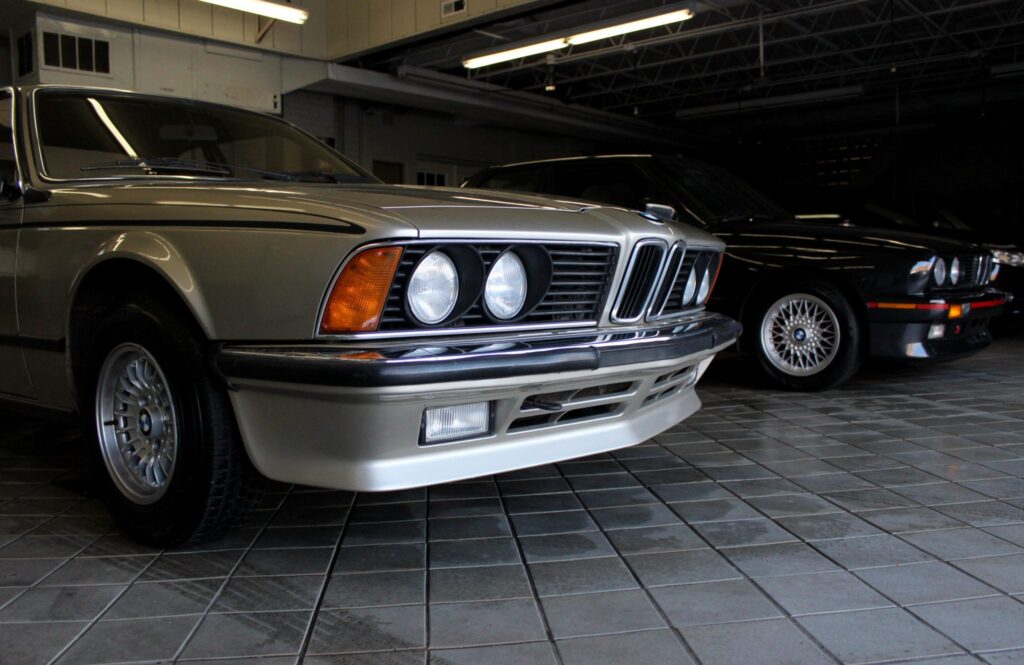
…This past weekend we finally saw a break in Chiberia’s bitter, grey winter. The sun came out for the first time in weeks and the temperature ticked above freezing….alright! We took this opportunity to stretch the legs of two cars that have been taunting us from the showroom, our ‘88 M3 and ‘84 Euro 635csi. First off, a bit of a bio on these two particular cars. We took delivery of the M3 back in late October, so luckily we had a couple of weeks of good weather before the car was confined to climate-controlled hibernation for the winter. Just a few days after getting the car, we drove it, along with our ‘91 318is, to the Chicago area’s finest Cars & Coffee event, FuelFed. The Diamond Schwarz Metallic M3 was a hit, flanked by its Brilliantrot baby brother. Having the two cars side-by-side really showed off the M3’s racecar-for-the-street appearance, its flared out, boxy fenders looking more striking than ever. This particular M3, though mint, has actually covered over 135,000 miles over the course of its thirty-year life. After getting behind the wheel and carving down some windy roads, it’s not hard to tell why this car has seen so much use. The e30 M3 gets a ton of hype in the classic car community as a “drivers’ car”, almost so much so that it’d be impossible to live up to, but it absolutely does. The car feels very alive and communicative; the driving experience is visceral and involved. The combination of the eager, high-revving S14 and the subtle yet no-nonsense exhaust note begs the driver to keep the gear low and the tach high. It’s easy to see why the e30 M3 was, and always has been, such a weapon on-track. The e30 M3 is one of the most respected road racing cars of all time, with an extremely impressive resume throughout the late 1980s. Between 1987 and 1988, the e30 M3 won the World Touring Car Championship, the European Touring Car Championship, the British Touring Car Championship, the Italian Touring Car Championship, the German Touring Car Championship (DTM), the Australian Touring Car Championship, and numerous other road-racing victories at the most grueling of circuits. And these championship titles weren’t in just any run-of-the-mill racing series; 80s touring car racing is widely considered to be some of the most competitive, no-holds-barred, wheel-to-wheel racing off all time. Now, back to this past weekend’s drive. The e30 M3 was in great company, tailed by our newly-acquired ‘84 Euro 635csi. This shark-nose 6er is a seriously special example, a true time-capsule. We purchased the car from the original owner, who filled us in on every detail of the car’s history. He had imported the car new as a young executive living in Northern California. He drove the car for only a few years, racking up 50,000 miles, before moving to Chicago and putting the car in a collector car garage, where it was kept in climate-controlled storage underneath a car cover. There it sat. In 2014, after 25 years of sitting, the owner received a call from the storage facility; they were closing up shop and needed the car gone. The owner decided that instead of trailering the car home he’d send it straight to a local BMW specialist, where he commissioned a complete mechanical rebuild. The car was entirely gone through, nearly every mechanical component replaced with a new OEM part. The receipt for the job, which totals north of $30k, is a five-page parts list, in 12 point font. The car sure feels like new; getting out of the M3 and into the 635csi makes you think long and hard about which one you’d rather hold onto. The 635csi, while maybe not quite as peppy as the M3, is no slouch. The 635csi saw racing success throughout the 1980s as well, having won the European Touring Car Championship in 1981, 1983, and 1986, in addition to the German Touring Car Championship (DTM) in 1984, and the Australian Touring Car Championship in 1985. The big “shark-nose” coupe was seriously intimidating dressed in motorsports livery. BMW was churning out home run after home run throughout the 1980s; from the docile little e21 to the fire-breathing M1 Procar, BMW really could do no wrong. Their economy cars sold, and their racing cars took home championship after championship. These cars have withstood the test of time from both an aesthetic and mechanical standpoint. The boxy lines of 80s BMWs have aged very well, with the more limited-production models gaining serious traction in the collector car market in recent years. Just five years ago a fairly well-sorted e30 M3 was a $20k car; today that same car is fetching twice as much. The same can be said about the e28 M5 of the same vintage. But the best part of these cars that come up for sale isn’t just the sharp looks, it’s the hilariously high odometer readings. It seems as though 100,000 miles constitutes “low, low miles”, while 200,000 is “just outside the break-in period”. It pains me to use this cliché, but they truly don’t build ‘em like they used to. Written by: Jake DePierro For more 80s BMW goodness, see the following videos of these cars in race trim at full chat: Thanks to Youtuber MPZracevideo for the footage!
Uncategorized

Killer B’s – WRC’s Most Extreme

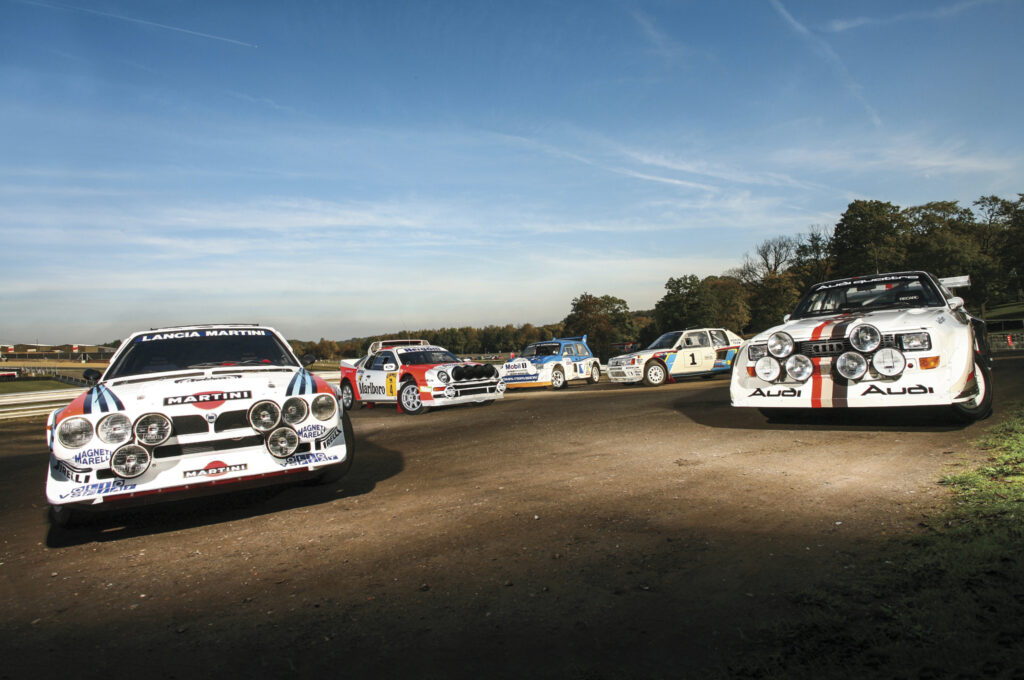
…Though it’s now been thirty years since the tragic end of Group-B, the buzz that the series created within the motorsport community has yet to fade away.  The fire-breathing, turbocharged monsters of Group-B are renowned as some of the most ferocious, difficult-to-tame racing cars in all of motorsport history.  The drivers of these cars were not only celebrated for their phenomenal skill, but for their superhuman-like focus and fearlessness.  It has been said that subconscious self-preservation instincts are what really separated the great drivers from the good ones, as drivers were truly living on the brink of death while behind the wheel at race speed. Group-B (1982-1986) World Rally Manufacturers’ Champions: Audi Quattro Championship Titles: 1982, 1984 Prior to the Audi Quattro taking the World Rally Championship by storm, rally cars were two-wheel-drive.  The instant success of the Audi Quattro showed other manufacturers that four-wheel-drive systems were the future of the sport.  For this reason, the Audi Quattro is universally viewed as the most important rally car of all time.  By the time Group-B came to an end in 1986, the turbocharged 5-cylinder Quattro was reported to be putting down 591hp while weighing only 2400lbs, good enough for a zero to sixty sprint of less than three seconds, on gravel.  With an absolute dream-team of drivers including Stig Blomqvist, Michèle Mouton, Hannu Mikkola, and Walter Röhrl, Audi’s rallying program was a force to be reckoned with in the early 1980s. Lancia Rally 037 Championship Titles: 1983 Quite possibly the prettiest car to ever win the World Rally Championship, the Lancia 037’s 1983 championship win marked the final time a rear-wheel-drive car would take the title.  The 1983 season was a showdown between reigning champions Audi, and Lancia, who had been plagued with mechanical issues throughout the previous season.  Behind the wheel of Lancia’s 037 was Walter Röhrl, who later went on to have phenomenal success driving for Audi, and Finland’s Markku Alén.  The 037 was slightly down on power as compared to its rival Audi Quattro, but with its weight advantage and a future hall-of-famer in Walter Röhrl behind the wheel, Lancia was able to capture the manufacturer’s championship. Peugeot 205 T16 Championship Titles: 1985, 1986 When the Peugeot 205 T16 arrived on the scene in mid 1984, it instantly became the car to beat.  Like the previously-dominant Audi Quattro, the 205 T16 was four-wheel-drive and heavily turbocharged.  However, the 205 T16 was mid-engined, while the Quattro was front-engined.  With a team of drivers including the likes of Ari Vatanen, Timo Salonen Michèle Mouton, and Juha Kankkunen, Peugeot was able to knock Audi off their throne and secure both the manufacturers’ championship and drivers’ championship in 1985 and 1986. Lancia Delta S4 Championship Titles: ~ The Lancia Delta S4 is one of the icons of Group-B and deserves a spot on this list, though it never actually won the Group-B championship.  With the increasing competition from teams with four-wheel-drive cars, Lancia decided to forego their rear-wheel-drive 037 and enter an all new, four-wheel-drive powerhouse, which they called the S4.  The S4 featured the most radical engine rallying had seen yet, a four-cylinder that was both turbocharged and supercharged.  The supercharger would override the turbo-lag on the low end, then the boost would kick in at 4000rpm.  The Delta S4 was an instant success, winning its first time out with Henri Toivonen at the wheel.  With the phenomenally-quick Toivonen and former champion Markku Alén on their side, Lancia had high expectations for the 1986 season.  Then tragedy struck.  Just four races into 1986, Toivonen and his co-driver, Sergio Cresto, were both killed when their car plunged into a ravine and burst into flames.  The Lancia team then vowed to win the championship in their honor.  They just missed it, finishing second in both the manufacturers’ and drivers’ championships.  1986 would be the final year of Group-B competition, having been shut down as a result of multiple driver and spectator fatalities.  With the Lancia S4’s instant success, it’s more than likely that if Group-B had been able to continue, the S4 would have become a championship winner.  After the shut-down of Group-B, the Group-A spec Lancia Delta went on to become the winningest World Rally Championship car of all time, winning 11 titles, including 6 consecutive WRC titles between 1987-1992. For more Group-B goodness, take a look at the following video.  Fantastic footage.  It’s not hard to see why Group-B was deemed “too dangerous” for both drivers and spectators.  Credit to YouTuber “Mr. M” and HistoricRacingHD:

Uncategorized

Sorry, It’s Not For Sale

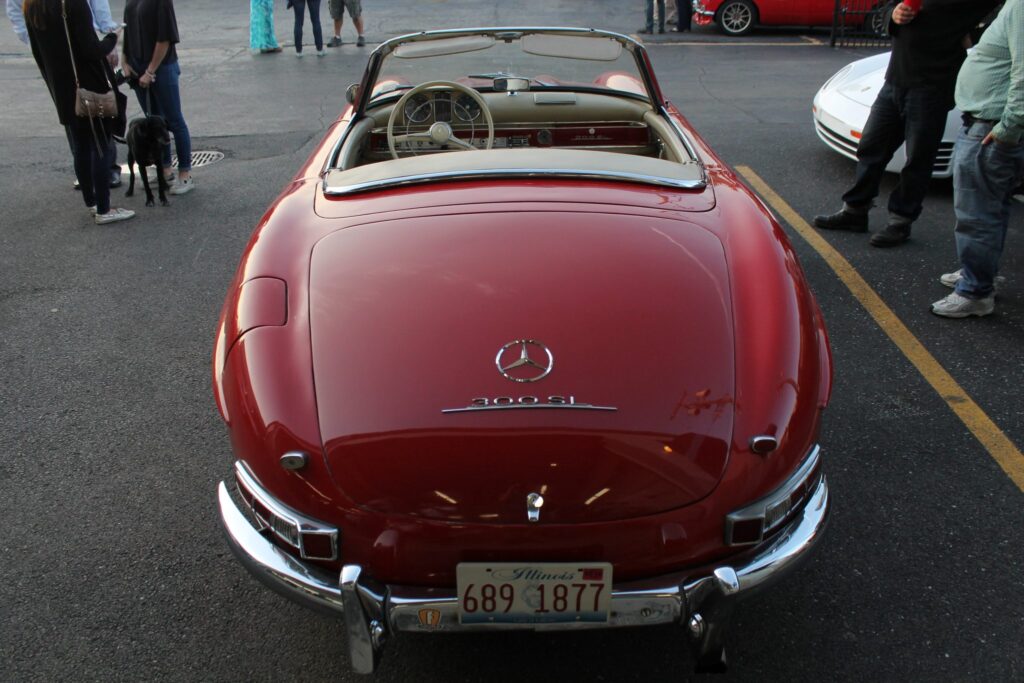
…There are a couple different types of collector car owners; there are those who are fastidious, never allowing their cars to be seen in public at anything shy of concours-level presentability, and then there are the drivers, owners who choose to forego often significant resale value in favor of using the car as the manufacturer intended, by getting behind the wheel and properly enjoying it. Certain types of cars will attract certain types of owners; generally, the more valuable the car, the more likely it is that the owner will be of the fastidious sort. When values of a particular model soar into the seven-figure range, we typically see the aforementioned “drivers” selling their cars, then to be purchased by those who will retire the car to their climate-controlled garage where they house the rest of their collection. Our good friend Shelly undoubtedly falls into the “driver” category. However, he has absolutely no intention of selling his car, a 1961 Mercedes 300SL Roadster, a car that has experienced an exponential increase in value since he purchased it in the mid 1970s for just $5000, in addition to a $1000 store credit at his business, Chicago’s oldest “progressive general store”. When Shelly bought the car, the 300SL Roadster was a stylish, albeit somewhat overlooked sports car. In true “driver” fashion, the first thing he did was fit a stainless exhaust and rack up some mileage. Years later, in 1986, the motor chewed itself apart. Finally it was time for the SL to receive some special treatment. Shelly’s close friend Kenny Widdes happened to own a body and mechanic shop in Chicago called Albany Auto (now home to Chicago Car Club). Shelly commissioned a light restoration, which included a fresh coat of factory-correct red paint as well as an interior refresh. Since 1986, the car has remained unchanged. The car is beginning to show it’s age by way of rock chips and interior cracking, but to Shelly, the car only gets sweeter with age. The crowds at every Cars & Coffee event seem to agree. He’s been offered seven-figure dollars for his car on multiple occasions, always declining without hesitation. “The car isn’t for sale”. Cars of this caliber are so rarely seen in “driver-level” condition that when show-goers see Shelly hanging by his car, everybody wants to hear the story behind it. The car is a social catalyst; Shelly will be the first to admit he’s not a terribly outgoing guy, but the car has a magnetic effect on people, which has led him to many like-minded individuals. He’s now a member of the Gullwing Group, and has become a staple of the Chicago classic car community. With a car as special as this one, it’s no wonder Shelly is a seasoned Cars & Coffee vet. You can find him and his 300SL at just about any classic-car gathering the greater Chicago area has to offer. The best part? He’s not deterred by an iffy weather forecast. When was the last time you saw a 300SL out in the rain? Shelly even drives the car through traffic in downtown Chicago, though he says he prefers to get the car out onto the highway and stretch its legs. It’s not the tight-quarters of city traffic that concerns him, it’s the bystanders that walk out into the road and obstruct traffic to snap pictures of him and his car. During the summer months, he routinely drives the car two and a half hours each way along the lake, from Chicago to South Haven, MI. While the 300SL is unquestionably Shelly’s go-to for weekend events, it isn’t his only classic car. Just this summer, we at Chicago Car Club found him a 1988 Mercedes 560SL. To the surprise of no-one, he’s logged over 3,000 miles behind the wheel in just his first three months of ownership. The type of classic car owner that Shelly represents is the type that all of us enthusiasts can get behind; he doesn’t keep his 300SL locked up in a private collection, he drives it on a regular basis and allows the rest of the world appreciate it. And that’s what it’s all about, enjoying the drive and sharing the appreciation for the automotive hobby with those like-minded, enthusiastic individuals around you.

Uncategorized

POTUS Eisenhower Limo to be Sold “No Reserve” at Mecum

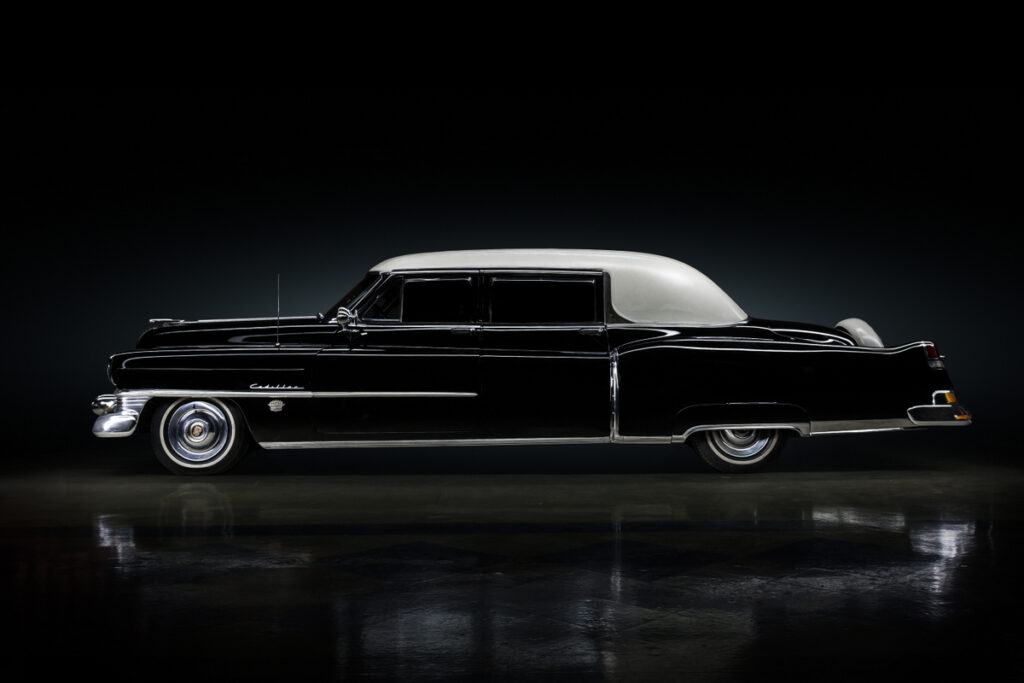
…The year was 1952, Cadillac’s 50th anniversary year. In preparation for the 1953 Paris Salon Show, Cadillac sent four chassis to Derham Body Company (Rosemont, PA) to be custom built to commemorate the anniversary. Commemorative styling included gold cast emblems and a through-the-bumper exhaust system, which tucked the tailpipes out of plain sight. This particular Series 75, build completion date May 13th, 1952, was one of those four cars displayed at the 1953 Paris Salon show, as evidenced by the plaque incorporated into the dashboard. Here’s where things really get interesting. When we purchased the car, we had been told that it had ties to President Dwight D. Eisenhower, though we took that with a grain of salt. However, while digging around the interior we were met with a surprise; lost behind the glove box was a folded-up letter, dated October 19th, 1953, that read as follows: “The 1952 Cadillac Custom Sedan conveyed to you during the year past, from this state, was the vehicle specifically built to order and acquired for use in transporting a special visiting dignitary General of the Army Dwight D. Eisenhower, President of These United States of America.” Our jaws hit the floor. The letter, written by Colonel Arnold D. Kessler, was stamped and signed by Motor Vehicle Commissioner Ina S. Thompson. It was sent with the car when it was shipped from France back to the United States. Derham of Rosemont went on to build two more vehicles for President Eisenhower, both of which were armored presidential motorcade cars. While this car was not part of his armored motorcade, it was said to have been used personally by Dwight D. Eisenhower after he had announced that he would accept the call to serve as President, and was serving as First Supreme Commander of NATO. The Cadillac Database has record of the car and notes the connection with Eisenhower. There is also an article on the car, published while in the previous owner’s hands, which provides some good background on the car. We went one step further and tracked down the owner who had the car titled in 1968; his family still resides in the same small town in Michigan and they confirmed the cars purported history. So, besides the seriously interesting ownership history of this gorgeous custom sedan, what makes this Derham limousine unique? Well let’s start with the fact that it’s a post-war Derham. Derham built very few cars after the war, like many of the smaller coach builders of the era. In addition, this Series 75 has a very unique and eloquent continental rear-end kit. The car is actually stretched to accommodate the rear deck and spare. The quarter panels and fins were extended to meet the decking and extend well beyond the normal endpoint of the rear deck lid. The lines down the side of the car are just stunning. We know of no other cars built this way, further evidence that this was a custom commemorative display car. All work done is seamless and looks absolutely outstanding. This car was built with “blind quarters”, meaning the rear side windows behind the back doors were deleted in the build, primarily for privacy reasons.  Another “privacy feature” was the smaller oval rear window.  The leather interior of this classic limousine survives in it’s original condition, and shows incredible patina.  The car is equipped with overhead duct air conditioning, unique to Derham.  Dual A/C units are intact in the trunk, as is the (Harley Davidson engine-like) over-sized compressor under the hood.  This coach actually also boasts a chilled freshwater drinking system; it’s pressurized and delivers fresh water all the way up to the glove compartment through a soda spout. This is the only Series 75 limousine that we have come across with a continental rear end. With the rare exterior specifications, fantastic interior quirks, and ties to President Eisenhower, this Cadillac is one truly special vehicle.

Scroll to Top